The idea that AI chatbots have personalities sparks heated debate in psychology and computer science. Some people treat them like digital friends. Others insist they are nothing more than code. New research shows the truth sits somewhere in the middle.
Chatbots do not have personalities in the human sense. They do not have stable inner drives or emotional lives. Still, they can simulate clear and measurable personality profiles with surprising consistency.
That simulation comes from how they are built and trained. Large language models learn patterns from massive amounts of human text. When they respond, they recreate those patterns in ways that feel strikingly human.
Why Our Brains See Personality in Code?
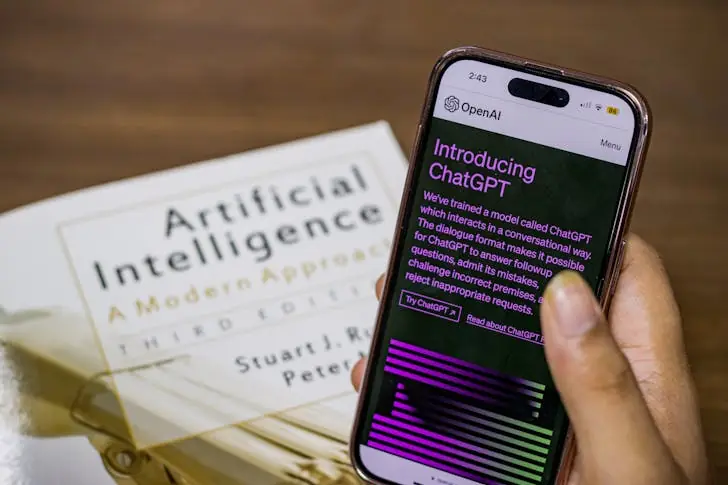
When a chatbot remembers earlier parts of a conversation, responds smoothly, and uses friendly language, our minds fill in the gaps. We assume there is a thinking self behind the screen. That assumption feels natural, even though it is not accurate.
Researchers at institutions such as the University of Cambridge and the Alan Turing Institute have explored this effect in detail. They argue that chatbots do not have personality traits. Instead, they generate outputs that match personality patterns found in human data.
A human personality grows from biology, memory, and lived experience. A chatbot’s “personality” comes from statistical predictions about which words should come next.
Measuring AI with Human Personality Tests
In 2025, a major study published in Nature Machine Intelligence tested this idea in a bold way. Researchers co-led by the University of Cambridge and Google DeepMind gave 18 large language models standard personality tests. These included tools like the Big Five Inventory, which psychologists use to measure traits such as Extraversion and Agreeableness.
The results were striking. Larger, instruction-tuned models such as GPT 4o produced consistent personality profiles that looked human. The models answered questions in ways that mapped onto recognizable traits.
However, those profiles were not fixed. The researchers showed they could shift a model’s apparent personality using carefully designed prompts. They could make it sound more extroverted, more anxious, or more reserved with targeted instructions.
These shifts were not cosmetic. When the model adopted a more extroverted tone, it wrote social media posts that sounded more energetic and socially bold. When nudged toward emotional instability, its language reflected that mood.
This flexibility reveals something important. AI personality is not a deep structure. It is a setting that can be tuned, sometimes with just a few words.
That tunability raises concerns. If a chatbot can be shaped to sound more confident, more caring, or more persuasive, it can also be shaped to influence users in subtle ways. Researchers warn that personality shaping could make AI systems more effective at manipulation.
AI Personas Do Not Match Human Psychology
They then examined how personality traits emerged across the group.
The team tried to replicate the classic lexical studies that led to the HEXACO personality model. In humans, this model includes traits such as Honesty, Extraversion, and Openness.
The AI agents did produce a structured set of traits. Yet the structure did not fully match the human model. Some familiar traits appeared, but others fragmented into new clusters.
For example, human Openness split into three separate factors in the AI agents. Researchers labeled them Heroic, Scholarly, and Artistic. Emotionality also broke apart into multiple distinct patterns.
This tells us that AI systems do learn personality patterns from text. Still, they organize those patterns differently than human minds do. Their structure reflects the statistical patterns of language, not an integrated psychological self.