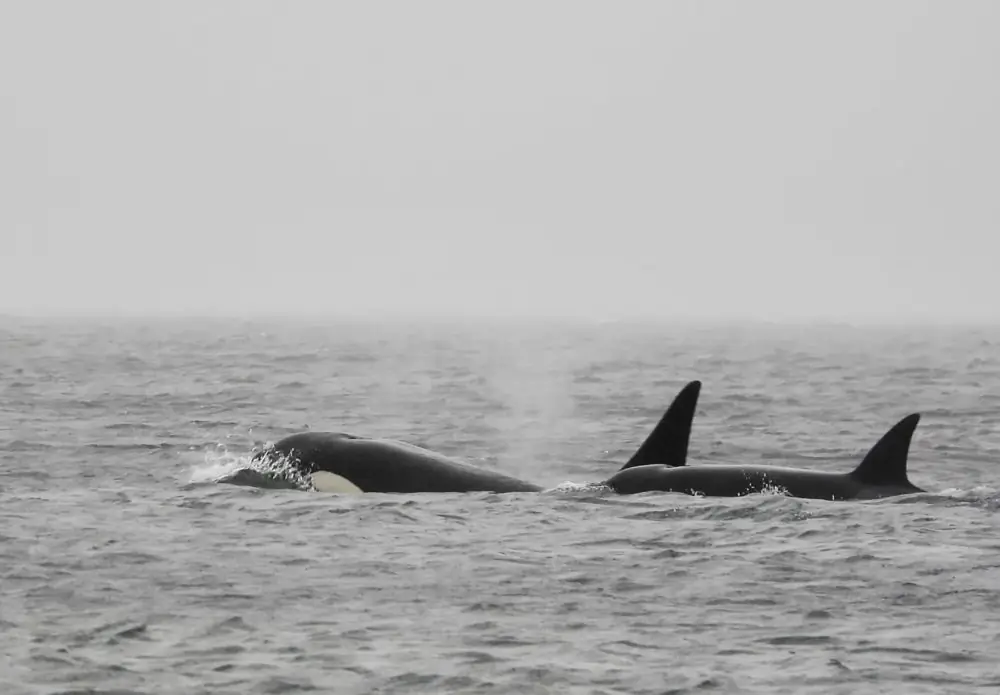
Something unusual cut through the busy waters of Seattle this spring. Three killer whales appeared where scientists thought they knew every face. These were not part of the well-known local groups. These were strangers, and that alone made headlines.
Researchers in the Pacific Northwest have tracked orcas for decades with near-perfect records. Every dorsal fin and saddle patch has been cataloged with care. So when three unknown whales showed up, eyebrows shot up. Experts called it unheard of.
The trio moved with purpose through Vancouver Harbor and then into Seattle’s industrial waterways. They stayed long enough for scientists and whale watchers to get a clear look.
However, what stood out even more was how calm they seemed in crowded waters. Ships passed, noise echoed, and the whales kept going. They looked like they belonged, even though no one had seen them before. That contrast made the mystery even deeper.
The Clue Written on Their Skin
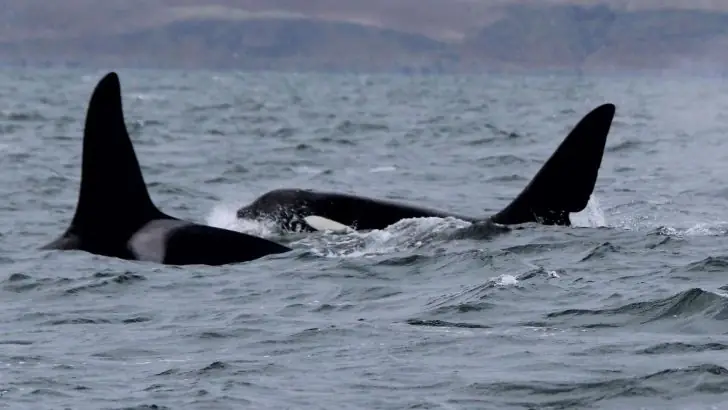
Cookie-cutter sharks live far from the cold waters of the Pacific Northwest. They prefer warm, open ocean zones, often in tropical or subtropical regions. So those scars told a story without words. These orcas had traveled far beyond the usual northern routes.
The marks were about the size of a large cookie, easy to spot against dark skin. Scientists did not need guesswork to identify them. These scars are well known in marine biology and rarely appear on local orcas. That made the trio stand out instantly.
This single clue helped map a possible journey. These whales likely spent time in warmer waters before moving north again. That kind of range is not common for documented pods. It suggests a life spent roaming rather than staying local.
What Else Do We Know About the Pod?
The group itself is small but tight. One adult female leads two younger males, believed to be her sons. They travel closely and behave like a family unit. That bond shows in how they hunt and move together.
Their journey began with a rare sighting near Anchorage, Alaska, in March 2025. After that, they seemed to vanish for a year. Then they reappeared in March 2026, far south in Vancouver. That gap adds another layer to their story.
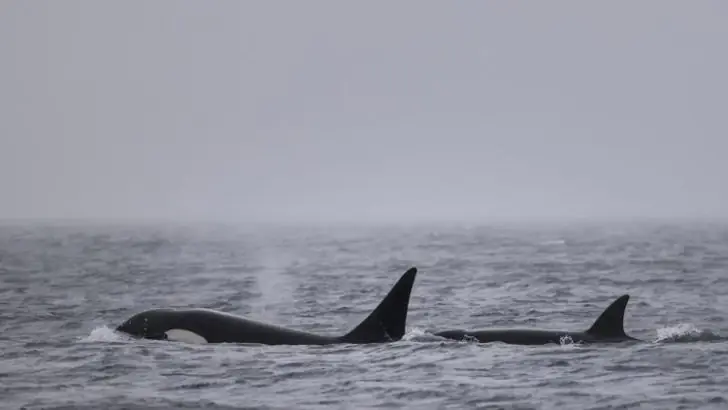
Their diet focuses on marine mammals like seals and sea lions. That explains why they moved into busy harbors. These areas are full of prey, especially around docks and shorelines. Scientists observed them hunting seals near Olympia and along Seattle’s waterfront. Their behavior confirmed their identity.
They hunt quietly and efficiently. Transient orcas do not rely on loud calls like fish-eating groups. Instead, they stay stealthy to avoid alerting prey. That makes them effective predators in tight, urban spaces.
Their presence also shows how adaptable orcas can be. They are not limited by human activity or noise. As long as food is available, they will enter places most people would not expect. That includes some of the busiest waterways on the coast.
Once identified, the trio received official labels. They are now known as T419, T420, and T421. The adult female holds the lead designation. These names help researchers track sightings and share data.
Scientists are working to learn more about their origins. They are collecting tiny skin samples for genetic testing. These samples can reveal family ties and population links. Even seawater is being tested for environmental DNA left behind by the whales.