A California photographer has quietly rewritten what we know about native bees. She did it without nets, without pinning specimens to boards, and without harming a single insect. Instead, she relied on patience, sharp eyes, and a camera lens.
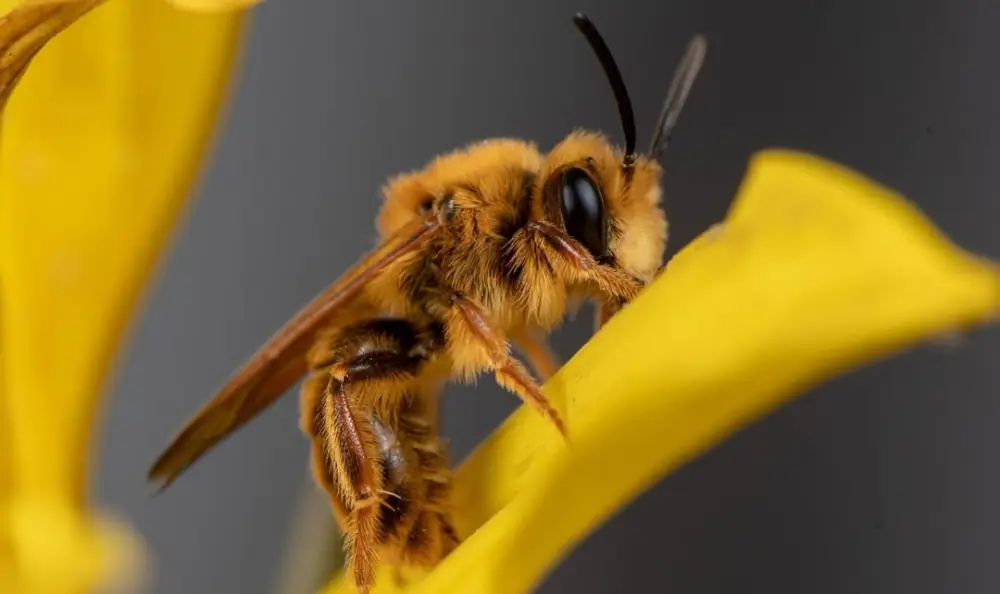
Krystle Hickman is a Los Angeles-based photographer, National Geographic Explorer, and community scientist. She has photographed more than 300 native bee species across California. For about 20 of those species, she is the first person ever to capture them alive on camera.
Hickman’s journey began in 2018 at a wildlife reserve. She snapped a photo of a bee she could not identify. That single image pushed her into a world most people never notice.
At the time, she focused on honey bees. They were familiar, popular, and easy to spot. Then she realized something important. Native bees were getting less attention and faced greater risks.
Hickman quickly saw a gap in the record. Scientists had documented many species through collected specimens, but few people had photographed them alive in the wild. She decided to change that.
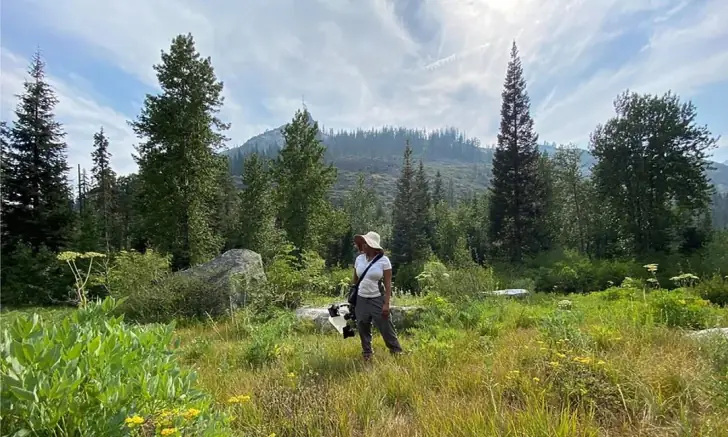
Her work has taken her across the Mojave Desert, Anza-Borrego, the Santa Monica Mountains, and up to the Oregon-California border. She times her trips around bloom cycles and weather patterns. She often waits hours beside a single plant, hoping a rare bee will appear.
Photographing Bees Without Harming Them Is an Art
Traditional bee research often involves collecting specimens. Melittologists, or bee scientists, typically examine preserved bees under microscopes. That method has built much of what we know today.
Hickman takes a different approach. She refuses to capture bees because many populations are already under stress. Plus, she believes studying them alive reveals behaviors that dead specimens cannot show.
This choice caused some tension at first. Some researchers questioned her decision to keep certain bee locations private to protect fragile populations. Over time, many came to value her work.
She collaborates closely with scientists and shares high-resolution images for identification. Christine Wilkinson of the Natural History Museum of Los Angeles County has praised Hickman’s contributions. Christine Wilkinson sees her as proof that community science can expand knowledge in powerful ways.
Hickman’s detailed photos capture pollen patterns, wing shapes, and tiny hairs that help experts identify species. In some cases, her images have helped confirm the existence of species that had rarely been documented alive.
She once said that making new discoveries by watching living insects is “shockingly easy” because so few people are doing it. That statement sounds bold, yet it highlights a simple truth. Many native bees remain overlooked because they are small, fast, and unfamiliar.
Native Bees and Native Plants
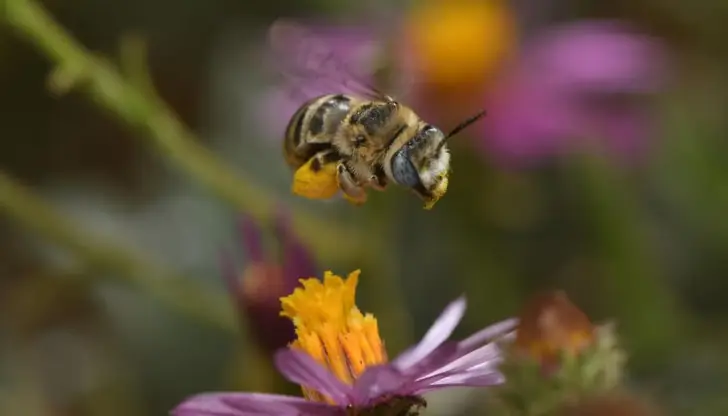
If you want to find native bees, you have to look for native plants. That idea guides her entire field strategy.
She uses the app iNaturalist to track blooming cycles of native flowers. She plans her trips around those blooms so she can be present when specific bees are foraging. This connection matters deeply. Between 20 and 45 percent of native bees are specialist pollinators. That means they collect pollen from only one type of plant.
Hickman’s work has reached far beyond California’s fields. In 2023, she received support from National Geographic as a National Geographic Explorer. That grant helped fuel her documentation efforts and public outreach.
In October 2025, she published “The ABCs of California’s Native Bees.” The book introduces readers to a different native bee for each letter of the alphabet. It is one of the best sellers in this genre.