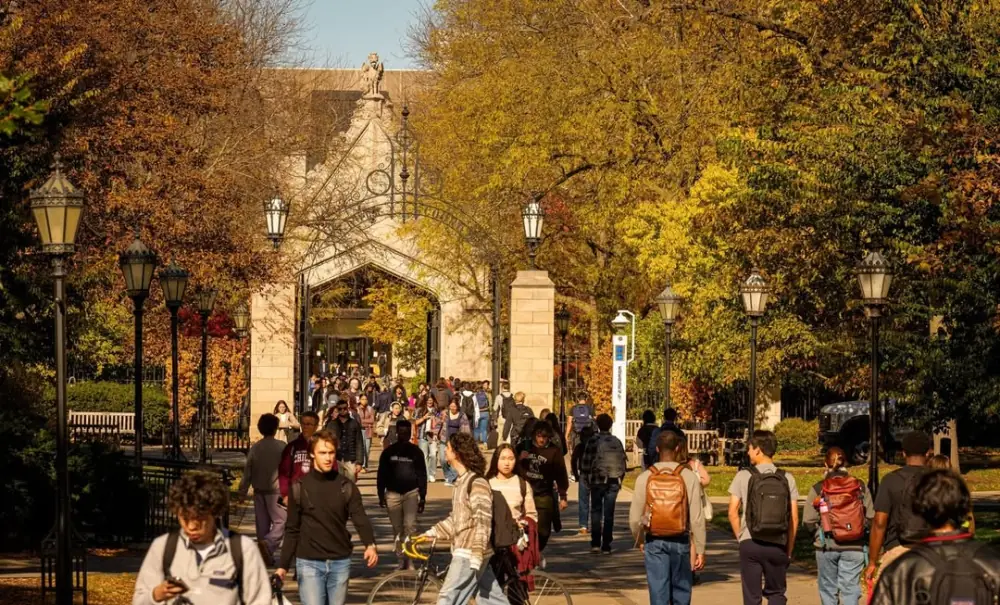
The University of Chicago is getting an early start on its anthropology centennial, and it is doing so in a way that feels very Chicago. Instead of speeches and glossy retrospectives, the department built a class that asks students to dig into the past, talk directly with faculty, and question how the field has grown into what it is today.
The undergraduate course, called “Anthropology at Chicago,” arrives as the department moves toward its 100th birthday in 2029. The timing matters. This is not nostalgia for nostalgia’s sake. It is a clear-eyed look at how anthropology at the University of Chicago has wrestled with power, culture, ethics, and history across generations.
The course takes a big idea and makes it personal. Students do not just read about famous thinkers. They hear from the people still shaping the discipline. They also uncover voices that shaped earlier moments, many of which never made it into textbooks.
By placing undergraduates inside the department’s long conversation, the class turns institutional history into something alive. It asks students to see anthropology not as a finished product, but as an ongoing argument.
Classrooms Are Built Around Conversation

Faculty wanted students earlier in their academic lives to understand how knowledge is made, challenged, and revised over time.
Each class meets over lunch, which sounds casual because it is meant to be. The format lowers the barrier between students and professors. Faculty members rotate through the course, each one discussing their current research and recent work in their own voice.
These sessions move fast and stay grounded. One week might focus on migration and development. Another might examine museums, archives, or documentary film. Students see how anthropologists work across formats, not just academic writing.
The structure also shows the field’s range. Anthropology here is not locked into a single method or theory. It stretches from fieldwork to film, from archives to public-facing projects. Students get a clear sense that the discipline is broader than they expected.
Alongside these conversations, students conduct original research. They work with University Archives and Special Collections, digging through letters, field notes, and departmental records. They also conduct oral history interviews with current and former faculty and graduate students.
The Department Is Shaped by Debate
Early on, it lived inside sociology, reflecting how fluid academic boundaries were at the time.
Frederick Starr was the first anthropology faculty member, appointed by President William Rainey Harper. The official Department of Anthropology arrived later, in 1929, under the leadership of Fay-Cooper Cole. From the start, the department carried tension between different ways of thinking.
One early shift came with the arrival of Edward Sapir, a linguistic anthropologist who pushed the field toward language, meaning, and symbolism. His work challenged older museum-focused approaches that treated culture as a collection of objects.
That shift sparked debate when A.R. Radcliffe-Brown joined the faculty. He brought a structural, Durkheim-inspired view of society that downplayed history in favor of social systems. The clash between these perspectives defined early Chicago anthropology and gave it an intellectual edge.
Later generations continued this pattern of argument and reinvention. In the late 1950s, scholars like Lloyd Fallers, Clifford Geertz, and David Schneider pushed the department toward symbolic anthropology.
The department’s reputation grew as it attracted scholars who tackled colonialism, power, and history head-on. Figures like Marshall Sahlins, Michel-Rolph Trouillot, and Jean and John Comaroff expanded the field’s scope and sharpened its critical voice.