The Neo-Babylonian Empire, often hailed as a cradle of ancient civilization, offers a fascinating glimpse into a world where power, art, and science converged to create one of history’s most vibrant societies. This empire, thriving between 626 BC and 539 BC, not only reshaped the Middle Eastern political landscape but it also left a lasting legacy in architecture, astronomy, and law that still captivates scholars and history enthusiasts alike.
At the heart of the Neo-Babylonian Empire’s story is its dramatic rise to power. Emerging from the ashes of political turmoil and the decline of Assyrian dominance, the Neo-Babylonians, under the leadership of Nabopolassar, seized the moment to assert their dominance. This period was marked by:

- Strategic military campaigns
- Ambitious construction projects
- The establishment of Babylon as a center of trade
- Culture
- Governance.
However, the empire’s ascendancy not only redefined geopolitical boundaries but also set new standards in governance and administration, with Babylon becoming the epicenter of cultural and economic life.
The Architectural Marvels of Babylon In the Neo-Babylonian Empire
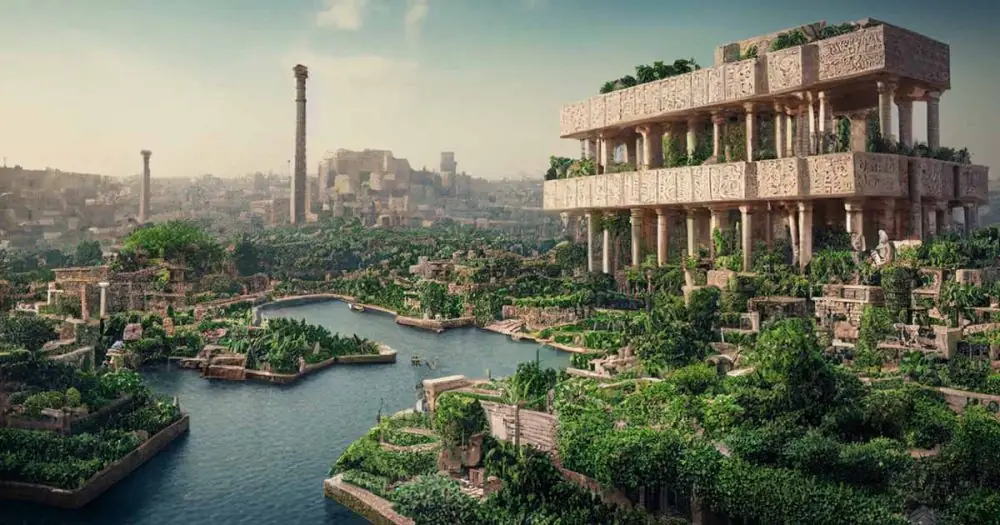
One cannot discuss the Neo-Babylonian Empire without marveling at its architectural achievements, most notably the Hanging Gardens of Babylon, one of the Seven Wonders of the Ancient World. Although debates persist about the gardens’ existence, they symbolize the empire’s advanced engineering and love for aesthetic beauty. Babylon’s city walls, the Ishtar Gate, and the ziggurat Etemenanki are testament to a society that valued grandeur and sophistication.
These structures not only demonstrated the empire’s technological prowess but also its commitment to deifying its achievements, embedding them in the fabric of its spiritual life.
The Legacy of Nebuchadnezzar II
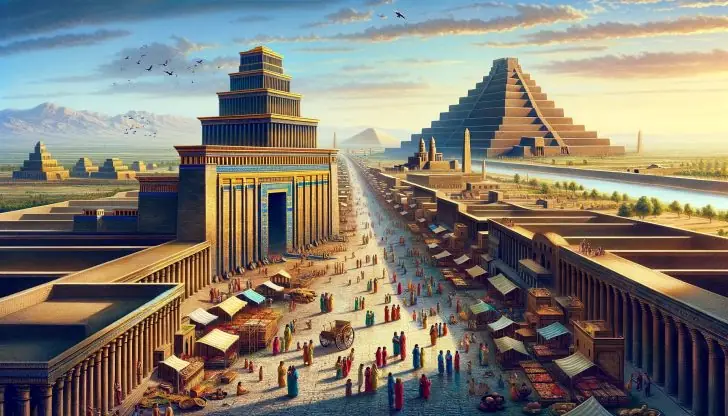
The zenith of the Neo-Babylonian Empire’s power and cultural influence is often associated with Nebuchadnezzar II’s reign. His ambitious building projects, including the famed Ishtar Gate and the reimagining of Babylon as a city of unparalleled beauty and grandeur, underscored his desire to immortalize his reign.
Sure! Nebuchadnezzar II’s military campaigns expanded the empire’s borders. But it was his dedication to Babylon’s transformation that left an indelible mark on history. His rule exemplifies the Neo-Babylonian commitment to blending architectural innovation with cultural and religious significance, making Babylon a beacon of ancient human achievement.
Scientific Achievements
Beyond their architectural and military feats, the Neo-Babylonians made significant contributions to science, particularly in astronomy and mathematics. Their meticulous observations of celestial bodies and the development of a lunisolar calendar were critical to agricultural planning and religious observances.
So, this alone underscores the empire’s intellectual curiosity and its role in laying the groundwork for future scientific endeavors. These achievements highlight the empire’s sophisticated understanding of the world and its relentless pursuit of knowledge.
The Fall and Legacy of the Neo-Babylonian Empire
The Neo-Babylonian Empire’s decline was as dramatic as its rise. In 539 BC, Cyrus the Great of Persia conquered Babylon, signaling the end of the Neo-Babylonian era. However, the empire’s influence did not wane with its fall. Instead, it left behind a rich tapestry of cultural, architectural, and scientific achievements that continue to inspire and intrigue. For instance, the Code of Hammurabi remains one of the oldest deciphered writings of significant length in the world. Thus, it offers invaluable insights into ancient laws and society.
Thus, the legacy of the Neo-Babylonian Empire extends beyond its tangible achievements. It serves as a testament to the human capacity for innovation, the pursuit of knowledge, and the creation of beauty. This empire, in its glory and complexity, continues to be a source of fascination. It offers endless lessons on the power of human ambition and creativity.