Where is the city of Troy located? This question has intrigued historians, archaeologists, and enthusiasts for centuries. Rooted in the epic tales of Homer’s “Iliad,” the city of Troy has been a symbol of ancient conflicts and legendary heroes. But beyond the myth, the actual location of Troy is in the northwest corner of modern-day Turkey, in an area known historically as the Troad.
The Search for the Lost City of Troy
The quest to locate the real Troy has a history almost as epic as the Trojan War itself. The ancient Greek poet Homer immortalized the city in his epic poem, describing it as a grand and formidable city besieged by the Greeks. For centuries, many believed that Troy was purely a creation of Homer’s imagination. However, the allure of the story led numerous explorers and archaeologists to the Troad region, searching for evidence of this ancient city.
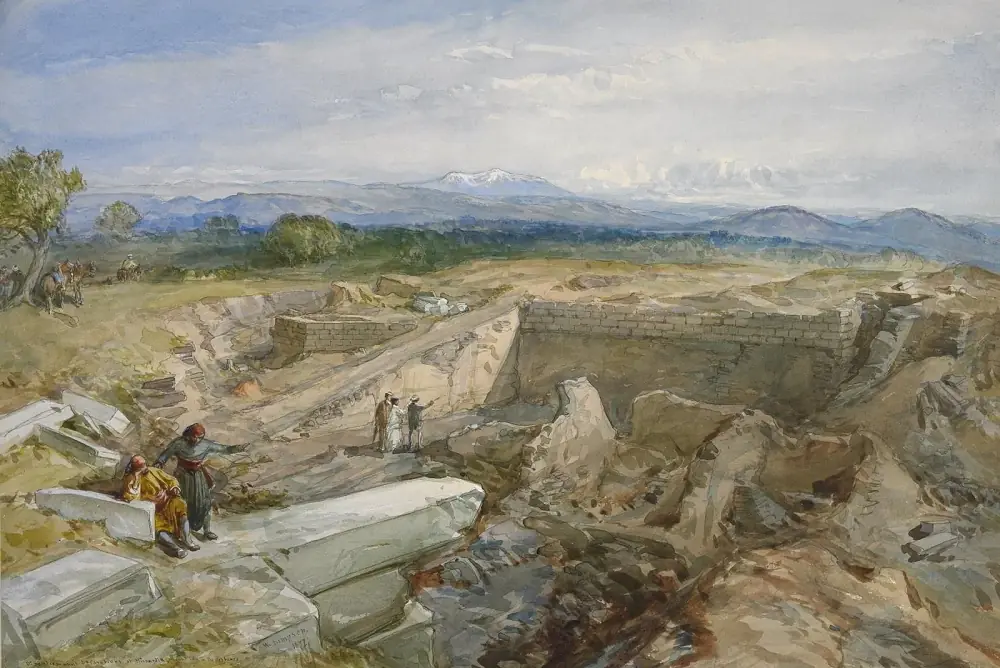
In the 19th century, a significant breakthrough occurred when the German archaeologist Heinrich Schliemann identified a site called Hisarlik as the location of ancient Troy. Schliemann’s excavation efforts uncovered layers of ruins, indicating a long history of settlement. These findings provided the first substantial evidence that Troy was more than a myth.
The City of Troy: A Historical Overview
The city of Troy was first settled in the Early Bronze Age, around 3000 BC. Archaeological evidence suggests that the city experienced numerous periods of growth and decline over the millennia. Each layer of the site at Hisarlik represents a different phase in Troy’s history, categorized by archaeologists as Troy I through Troy IX.
Troy I, the earliest settlement, was a small but thriving village. By the time of Troy II (2550–2300 BC), the city had developed strong walls and a prosperous citadel. Its strategic location at the entrance to the Dardanelles strait made it a crucial hub for trade and commerce. This prime position allowed Troy to flourish as a center for both maritime and overland trade.
The Flourishing City
During the Late Bronze Age, roughly between 1750 and 1180 BC, Troy reached its zenith. This period, known as Troy VI and VIIa, saw the construction of impressive sloping walls, remnants of which still stand today. The city expanded significantly, with a more enormous citadel and a sprawling lower town.
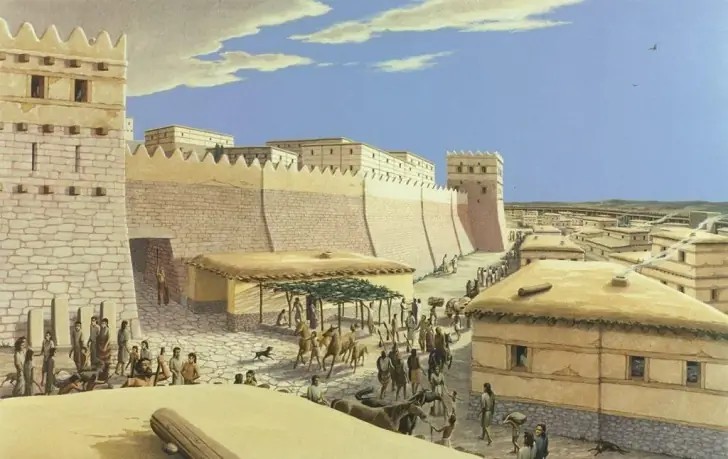
Troy’s wealth was not only due to its strategic location but also its fertile agricultural land. The surrounding region was ideal for horse breeding, as reflected in the “Iliad,” where Hector is described as the ‘tamer of horses.’ Additionally, sheep farming and textile production were vital industries contributing to the city’s economy.
The Evidence for the Trojan War
One of the most enduring questions about Troy is whether the Trojan War, as described by Homer, actually took place. During the Late Bronze Age, Troy was an influential city but not a dominant force in the broader ancient world. The Hittites, a powerful civilization in Anatolia, referred to Troy as ‘Wilusa,’ a name linked to the Greek ‘Ilios’ or ‘Ilion.’
Despite its smaller size on the world stage, Troy’s wealth and strategic location made it a target. Ancient records from the Hittites and other sources provide some context for conflicts in the region, suggesting that the story of the Trojan War may have roots in actual historical events, even if Homer’s epic is a blend of fact and fiction.
Where Is the City of Troy Located? Rediscovering Troy
The journey to uncover the true location of Troy has been a tale of determination and discovery. In the 19th century, Frank Calvert, an amateur archaeologist, played a crucial role in identifying Hisarlik as a potential site for Troy. When Heinrich Schliemann arrived with a fervent desire to prove the Iliad’s historical basis, Calvert’s insights guided him to the right location.
Schliemann’s excavations between 1870 and 1890 brought significant attention to the site. He claimed to have discovered ‘Priam’s Treasure,’ a collection of gold and silver artifacts he believed belonged to the legendary king of Troy. While this interpretation has been debated, Schliemann’s work undeniably confirmed Hisarlik as the site of ancient Troy.